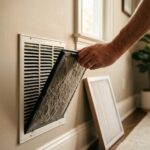
The purpose of an air filter in a home is to remove dust, dirt, and other airborne particles from the air as it circulates through your heating and air conditioning (HVAC) system.
It serves several important purposes:
1. Improves indoor air quality
-
Traps dust, pollen, and pet dander.
-
Captures mold spores and other airborne particles (depending on filter quality).
-
Helps reduce airborne allergens and irritants.
2. Protects your HVAC system
-
Prevents dust and debris from building up on the air conditioner’s evaporator coil and blower motor.
-
Helps keep the system operating efficiently.
-
Reduces wear and tear, potentially extending the life of your equipment.
3. Improves airflow and system performance
-
Allows air to circulate properly when the filter is clean.
-
Helps your HVAC system heat or cool your home efficiently.
-
Can help prevent restricted airflow that may cause the system to freeze up or overheat.
4. Helps control dust in your home
-
Captures some dust particles before they circulate back into your rooms.
-
May reduce how quickly dust accumulates on furniture and surfaces.
How often should you change your air filter?
|
Filter type |
Typical replacement |
|---|---|
|
1-inch filter |
Every 30–90 days |
|
2-inch filter |
Every 2–3 months |
|
4–5-inch filter |
Every 6–12 months |
These are general guidelines; pets, allergies, construction, and heavy HVAC use can mean more frequent changes.


Important: A dirty air filter can restrict airflow, make your air conditioner work harder, increase electricity bills, and potentially cause expensive HVAC problems.
Bottom line: Your home’s air filter has two main jobs: protect your HVAC equipment and help keep the air inside your home cleaner.
 An inspection is just the start of keeping your home in good condition. With each inspection we offer a free book filled with home maintenance tips and other valuable information. Please